From educational certificates and marriage certificates to commercial documents — PassPex simplifies the apostille process for use in Hague Convention countries. We handle notarization, MEA apostille, and country-specific requirements with complete transparency.
Pick a topic to dive in. From the basics to country-specific rules and OCI applications — everything in one place.
Both authenticate documents — but they operate at different levels and for different purposes across borders.
Notarization is done by a local notary public and authenticates the signatory's identity and signature — generally valid only within the same country.
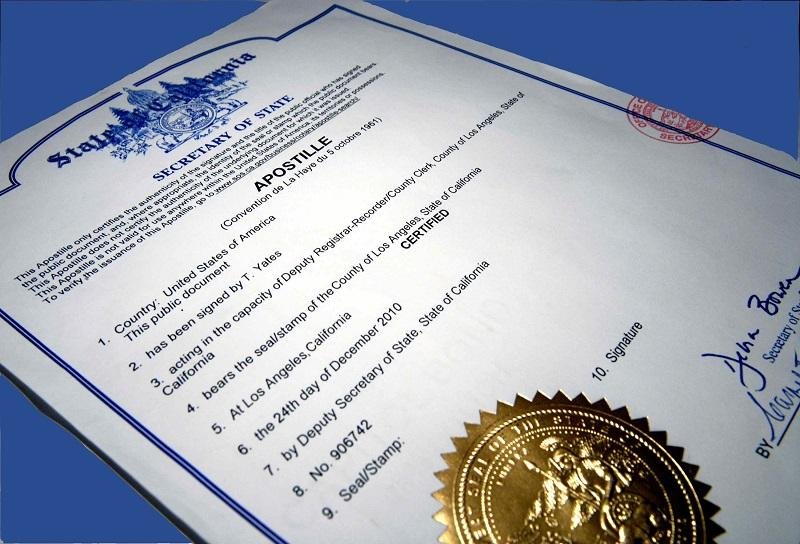
Apostille is issued by a designated government authority (e.g., MEA in India) and certifies the notarized document for use in Hague Convention member countries.
Notarization is often a prerequisite — most documents must be notarized before they can be apostilled.
Apostille removes the need for further legalization or embassy attestation in the destination country.
For non-Hague countries, a consular legalization process is required instead of apostille.
Before any apostille, your documents must meet these baseline requirements.
Must be an original or certified true copy — photocopies are generally not accepted.
Must be notarized by a registered notary public (for personal/educational documents).
For commercial documents, Chamber of Commerce attestation may be required before MEA apostille.
Must be valid and legible — damaged or unreadable documents are rejected.
Translation into English may be required if the original is in a regional language.
Must not be expired (where applicable, e.g., PCC, medical certificates).
A valid ID proof and application form may be required for submission.
A clear sequence of steps — here's how it works in India.
Step 1 — Identify your document type: educational, personal, or commercial. Each has a different pre-authentication route.
Step 2 — Notarization: get the document notarized by a registered notary public.
Step 3 — Pre-authentication (if required): educational docs need HRD/State attestation; commercial docs need Chamber of Commerce attestation.
Step 4 — MEA Apostille: submit to the Ministry of External Affairs (Delhi/Mumbai/Kolkata/Chennai/Bengaluru) for the final apostille stamp.
Step 5 — Collection: receive your apostilled document with the official MEA sticker and stamp.
PassPex handles every step — notarization coordination, MEA submission, and delivery — so you never visit multiple offices.
End-to-end apostille assistance for a wide range of documents, with transparent pricing and real-time updates.
Educational documents: degree certificates, diplomas, mark sheets, transcripts, school certificates.
Personal documents: birth, marriage, and death certificates, PCC, affidavits, single-status certificates.
Commercial documents: company registration, invoices, export-import documents, power of attorney, board resolutions.
Medical documents: medical certificates, vaccination records, fitness certificates.
Notarization coordination and HRD/Chamber attestation included in the package.
Courier and delivery of apostilled documents across India and internationally.
Apostille is recognized only in Hague Convention member countries — requirements vary by destination.
Hague Convention countries (apostille accepted): USA, UK, Canada, Australia, Germany, France, Italy, Spain, Netherlands, Japan, South Korea, UAE (for some documents), and 120+ others.
Non-Hague countries (consular legalization required): China, Saudi Arabia, Qatar, Kuwait, Oman, Bahrain, Egypt, and others — these require embassy/consulate attestation after MEA.
UAE: apostille is accepted for some documents, but UAE Embassy attestation may be required for others — we advise case by case.
Germany, France, Italy, Spain: apostille is sufficient for most personal and educational documents.
USA, UK, Canada, Australia: apostille accepted for all standard document types.
We provide country-specific guidance and handle the correct route for your destination.
Applying for an OCI card? Certain foreign documents may need to be apostilled before submission.
What needs apostille: foreign birth certificates, marriage certificates, and name-change affidavits issued outside India.
Who issues it: the apostille must be issued by the competent authority in the country where the document was issued — not by the Indian MEA.
For Hague Convention countries: a simple apostille from the issuing country's authority is sufficient.
For non-Hague countries: the document must be legalized by the Indian embassy/consulate in that country.
Translation: if the document is not in English, a certified translation may be required along with the apostille.
PassPex provides guidance and coordination for OCI-related apostille requirements, including document review before submission.
From document review to final MEA apostille and delivery — we manage every stage.
Share your document details and we confirm the exact apostille route for your destination country.
We coordinate notarization and any required HRD or Chamber of Commerce attestation.
Your document is submitted to the Ministry of External Affairs for the official apostille stamp.
Get real-time status updates and receive your apostilled document via secure courier.
Common questions about apostille, notarization, country requirements, and OCI documents.
An apostille is an official certificate issued by a designated government authority (in India, the MEA) that authenticates the signature and seal on a public document. It is required for documents that will be used in a foreign country that is a member of the Hague Convention. Without an apostille, your document may not be legally recognized abroad.
Notarization is a local process performed by a notary public who verifies your identity and witnesses your signature. It is generally only recognized within the same country. Apostille is a higher-level authentication issued by a government authority that certifies the notarized document for international use in Hague Convention countries. In most cases, notarization is a prerequisite step before apostille.
Apostille is accepted in all member countries of the Hague Convention, which includes over 120 countries such as the USA, UK, Canada, Australia, Germany, France, Italy, Spain, Netherlands, Japan, South Korea, and many more. For non-Hague countries like China, Saudi Arabia, Qatar, Kuwait, and UAE (for certain documents), a consular legalization process is required instead.
The timeline depends on the document type and the pre-authentication requirements. Generally, the process takes 7–15 working days after all documents are submitted. Educational documents requiring HRD attestation may take longer. Commercial documents requiring Chamber of Commerce attestation also add a few days. We provide a clear timeline upfront and keep you updated at every stage.
Yes, in most cases the original document or a certified true copy is required. Photocopies are generally not accepted by the MEA or pre-authentication authorities. We guide you on exactly which documents need to be submitted in original and which can be certified copies, so there are no last-minute surprises.
No. Apostille must be issued by the competent authority in the country where the document was issued. For example, a US birth certificate must be apostilled in the USA, not in India. For OCI applications, foreign documents need to be apostilled in their country of origin and then submitted with the OCI application. We provide guidance on this process for our clients.
Apostille is a simplified, single-step authentication for Hague Convention countries. Consular legalization is a more complex, multi-step process for non-Hague countries, involving MEA attestation followed by attestation by the destination country's embassy or consulate in India. We handle both routes and advise you on the correct one for your destination.
Fill in your details and our apostille specialists will reach out on WhatsApp with a personalised checklist and next steps.